
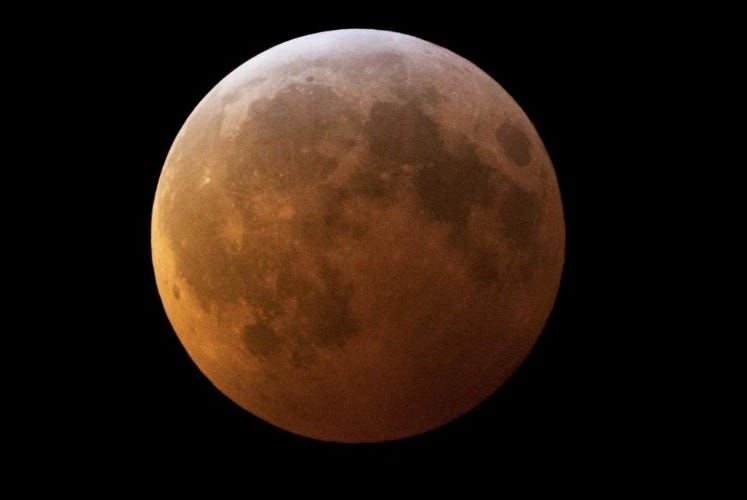
Missouri Residents to Witness a Captivating Total Lunar Eclipse
On the night of March 13 into March 14, residents across the United States will have a rare chance to witness a total lunar eclipse. This astronomical phenomenon occurs when the Earth passes directly between the sun and the moon, casting a shadow over the moon’s surface.
The last total lunar eclipse occurred in November 2022, and this upcoming event promises to be a spectacular show for those willing to stay up late.
What is a Total Lunar Eclipse?
A total lunar eclipse happens when the entire moon moves into the Earth’s darkest shadow, known as the umbra. At this point, the moon will take on a distinctive reddish hue, often referred to as a “blood moon.” This color change results from Earth’s atmosphere scattering sunlight, allowing only the longer red wavelengths to illuminate the moon.
When to Look Up in Springfield
The total lunar eclipse will be visible starting at 10:55 p.m. CST on March 13. Here’s a timeline of the event:
- 10:55 p.m: Penumbral eclipse begins; the moon will start to subtly dim.
- 12:47 a.m: Partial eclipse begins; the moon appears as if a bite has been taken out of it.
- 1:26 a.m: Totality starts, showcasing the blood-red moon.
- 1:59 a.m: The height of the eclipse, where the moon will be at its reddest.
- 2:31 a.m: Totality ends.
- 3:10 a.m: The moon begins to exit the shadow, gradually losing its red hue.
- 5:00 a.m: The entire event wraps up, with the moon visible again in its full state.
Viewing the Eclipse
For the best experience, find a location free of light pollution and away from bright city lights. Fortunately, lunar eclipses can be observed without special equipment, although binoculars or telescopes can enhance the experience.
What Can You See During the Eclipse?
Aside from the stunning view of the blood moon, stargazers may spot nearby planets like Jupiter and Mars, particularly during the early stages of the eclipse.
Remember, this total lunar eclipse will not be witnessed again in the US until March 2026. Don’t miss this dazzling celestial event!


