
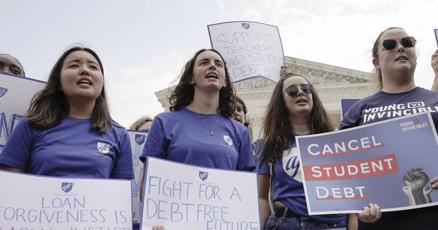
The Trump administration’s recent changes to student loan programs are causing frustration and confusion for some borrowers. In response to a February court ruling that blocked certain Biden-era programs, the Education Department took down online and paper applications for income-driven repayment plans.
‘This especially hurts anyone who’s lost their jobs, including federal workers,’ said Natalia Abrams, founder and president of the Student Debt Crisis Center. ‘A few months ago, they would have been able to get on a zero-dollar income-driven repayment plan.’
The removal of application materials has also led to confusion about the recertification process for borrowers already enrolled in repayment plans. Income-driven repayment plans take a borrower’s finances and family size into account when calculating monthly payments, but borrowers must periodically demonstrate they still qualify.
Adding to the uncertainty are layoffs at the Education Department, which oversees the federal loan system. The federal website for student loans and financial aid, StudentAid.gov, suffered an hours-long outage, but the department assured that it will continue to deliver on its commitments.
‘It’s been wave after wave of bad news for student borrowers,’ said Aissa Canchola Bañez, policy director at the Student Borrower Protection Center.
Contact your loan servicer
All borrowers currently enrolled in income-driven repayment plans should ‘get a sense of when your recertification deadline is and explore what options are available,’ Bañez advised, noting that some forms are not currently available.
Recertification confirms a borrower’s financial situation. With some forms not accessible, borrowers unable to complete that process may face jeopardy.
If borrowers are already on an income-driven repayment plan, they should still be allowed to remain on it if they can recertify their income. Abrams recommended taking screenshots of account status on the student aid website for future reference.
Resources are available
State-specific and state-level resources are available for student borrowers. Congressional members have teams available to assist constituents struggling with federal agencies or loan servicers.
Borrowers are encouraged to contact their representatives and open a casework file, stating, ‘I need your help to understand how to get into an affordable repayment option, which I’m entitled to under the law,’ suggested Bañez, emphasizing the importance of seeking support during these changes.
Despite the recent alterations to the Education Department and challenges faced in the consumer financial sector, loan servicers still must consider a borrower’s financial situation. ‘You can inquire about temporary forbearance or deferment of payments for financial hardship,’ Bañez noted.
State attorneys general also take inquiries from student borrowers.
Jessica Fugate, 42, a government relations manager for the city of Los Angeles, shared her concerns as she was nearing student loan forgiveness through the Public Service Loan Forgiveness program after 120 payments. ‘I’ve spent most of my career giving back to others,’ she said, expressing dismay over her repayment options in light of these changes.
Debbie Breen, 56, who works at a healthy aging agency in Spokane, emphasized her uncertainty as well, stating, ‘I’m kind of in panic mode because if they stop income-driven repayment plans, I don’t know if I will be able to afford the payments each month.’


